Quick Verdict
If you only need access to AI application accounts, start by testing static residential or ISP proxies. If you're building an API gateway or CLI workspace, prioritize stable egress, audit logs, and organization-level network policies. If you're doing RAG or AI Agent retrieval, focus on evaluating the compliance of public web scraping, request rate limits, rendering capability, and retry handling.
What is an AI proxy?
An AI proxy is a network configuration prepared for AI applications, AI programming CLIs, API gateways, browser automation, and data retrieval pipelines. Its core value isn't hiding identity. It lets teams manage network egress by region, session, workspace, and data source, while keeping auditable test records.
Scenarios, proxy types, and acceptance priorities
| Scenarios | Typical Use Cases | Preferred Proxy Types | Acceptance Priorities |
|---|---|---|---|
| AI app accounts | Web login, regional QA, and team workspace verification for ChatGPT, Claude, Gemini, and similar platforms | Static residential proxy or ISP proxy | Stable sessions, optional city/country, dedicated egress, manual login without sharing credentials |
| AI coding CLI | Codex CLI, Claude Code, Gemini CLI, internal LLM gateway | Enterprise HTTP(S) proxy, fixed egress, API gateway | Supports environment variables, clear certificate chains, auditable logs, and no mixing of personal browser credentials |
| AI Agent browser | Playwright, Puppeteer, managed browser API, MCP browser tools | Residential proxies, Browser API, and Web Unlocker-type products | Public web authorization, rendering wait, failure retries, rate limits, and robots policy |
| RAG data retrieval | Public web search, source coverage checks, localized SERP, or e-commerce data collection | Rotating residential proxy, SERP API, crawler API | Source allowlist, field validation, deduplication, and traceable data sources |
An AI proxy isn't a single product, but an access architecture
Many people assume an AI proxy means 'switch IP and AI tools will work,' and this leads to poor selection. A real AI proxy setup starts by distinguishing four layers: the account session layer, the command-line/API layer, the browser automation layer, and the public web retrieval layer. Each layer fails for different reasons and needs a different proxy type.
The account session layer prioritizes regional consistency, browser profile isolation, and minimal switching. The CLI/API layer prioritizes HTTPS egress, certificates, keys, and logs. The browser automation layer prioritizes rendering, screenshots, waits, and retry handling on failure. The RAG retrieval layer prioritizes source allowlists, field quality, deduplication, and citations. Mixing these goals together can leave you with a proxy plan that looks large on paper but doesn't match your actual needs.
This is also why the same provider's ranking changes across different AI scenarios. Bright Data suits putting Browser API, Web Unlocker, and public web data into Agent/RAG workflows. Proxy-Seller is better for fixed egress IPs and CLI connectivity. IPRoyal is better for low-cost, small-sample account sessions. SOAX is better for city-level, mobile network, or carrier-perspective needs. Decodo suits mid-scale self-serve residential proxies and multi-region QA.
AI proxy evaluation matrix
The table below breaks down 'I want to buy a proxy' into engineering problems that can be verified. If acceptance evidence can't be written down, the requirement isn't ready for procurement yet.
| Judgment Items | Applicable Scenarios | Preferred Solution | Acceptance Evidence |
|---|---|---|---|
| Account Session | Web login and regional QA for ChatGPT, Claude, and Gemini | Static residential / ISP / small fixed egress | Keep the same account in the same region; do not export cookies; log the number of security verifications |
| CLI and API | Codex CLI, Claude Code, Gemini CLI, OpenRouter, internal LLM gateway | HTTP(S) enterprise proxy / fixed egress / API gateway | Verify environment variables, certificates, NO_PROXY, key locations, model list, and error codes |
| Agent browser | Playwright, Puppeteer, MCP browser tools, managed Browser API | Residential proxy / Browser API / Managed unblocking layer | Limit domains, actions, and budget; save screenshots, HTML, HAR, or error summaries |
| RAG Retrieval | Public web pages, SERP, directories, public e-commerce pages, documentation sites | SERP API / Scraping API / Rotating residential proxy | Source allowlist, crawl time, region, language, field validation, and deduplication rules |
AI proxy failure diagnosis
Proxy failures rarely have just one cause. Separating symptoms, possible causes, and troubleshooting actions helps reduce wasted IP rotations, unnecessary provider switches, and unnecessary budget increases.
| Symptoms | Common Causes | Troubleshooting Method |
|---|---|---|
| Repeated Login Verification | Frequent account region changes, mixed browser profiles, and differences in shared proxy egress history | Fix the account region, switch to separate profiles, reduce switching, and start with manual login QA |
| CLI timeout | HTTPS proxy, certificate, DNS, NO_PROXY, or sandbox network connectivity failures | First curl the official API and console, then run a minimal CLI request, and record error codes |
| Agent can't fetch content | The page requires JS rendering, wait strategy is insufficient, the target domain is unauthorized, or the structure has changed | Save failure screenshots, reduce concurrency, confirm public authorized sources, then decide whether to adopt a Browser API |
| RAG answer drift | Poor source quality, incorrect scraped fields, excessive duplicate content, no citation chain | For each chunk, store the URL, timestamp, region, parser version, and spot-check results |
Research addendum: divide AI proxy use by access layer
A workable AI proxy setup doesn't route all traffic through one proxy pool. Instead, it separates account sessions, CLI/API calls, browser automation, and RAG retrieval into distinct access layers. Official documentation shows that Codex CLI, Claude Code, Gemini CLI, OpenRouter, and managed Browser APIs differ in network entry points, authentication methods, and observability. So when purchasing, define the access layers first, then choose the IP type.
Official Documentation Calibration
The official sources below are used to calibrate the factual boundaries of this article, focusing on network entry points, authentication methods, proxy capabilities, and the scope of applicability for hosted browsers. Actual purchasing decisions should still depend on account permissions, terms of service, and testing in your target regions.
- OpenAI Codex CLI: Used to confirm Codex CLI's local terminal positioning, login method, and workspace boundaries.
- Claude Code network configuration: Used to confirm enterprise proxy, NO_PROXY, custom CA, and SOCKS support boundaries.
- Gemini CLI configuration: Used to confirm Gemini CLI proxy parameters, workspace configuration, and sandbox-related settings.
- OpenRouter API Reference: Used to confirm the API entry point, model routing fields, and how the upstream provider is selected.
- Bright Data Agent Web Access: Used to understand the product tiers of AI Agent public web access, Browser API, SERP, and Web Unlocker.
AI proxy selection tiers
| Level | Questions to Ask First | Acceptance Method |
|---|---|---|
| Account Session Layer | Should you maintain the same region, same browser profile, and same login state over the long term? | Prioritize testing static residential or ISP egress. Record security verification, model lists, regional prompts, and login continuity. |
| CLI/API layer | Is it just command-line, SDK, API gateway, and console access? | Prioritize fixed HTTP(S) egress, enterprise proxies, and gateway logs, and verify certificates, NO_PROXY, DNS, and error codes. |
| Browser Execution Layer | Does the page rely on JS, clicks, scrolling, forms, or screenshots? | Validate first with a small sample using self-hosted Playwright. Only evaluate Browser API when failure rates or maintenance costs become high. |
| Data Retrieval Layer | Do you need to turn public web pages into citable, deduplicated, and replayable RAG sources? | Prioritize official APIs, datasets, SERP, or managed unblocking layers. Proxies only supplement access capability and do not replace source governance. |
AI proxy architecture breakdown
- Start with a 'Use Case Register' that lists, for each task, the platform, target region, account type, data source, whether a browser is needed, and whether an API key is needed.
- Keep proxy configuration at the task or gateway layer. Don't scatter it across personal browsers, scripts, CI, and Agent prompts.
- For every trial run, save the minimum evidence: IP region, ASN/carrier, HTTP status, platform error code, screenshots, key fields, and cost.
- Fully separate account sessions from public web retrieval. The former values stable identity, while the latter values source licensing, rate limits, and replayability.
- After launch, set budgets by access layer: track web access by account and verification rate, track CLI/API by requests and models, and track Browser API by browser minutes and successful fields.
Easily Misjudged Risks
- Don't use the proxy to explain every failure. AI platforms also check devices, login history, payment status, organization permissions, model permissions, and request patterns.
- Never copy cookies, browser profiles, cloud service credentials, or team account configurations to third-party proxy tools.
- RAG and Agent tasks must retain the source, crawl time, region, and parser version. Otherwise, you can't tell later whether answer drift is caused by network issues or data issues.
- A large IP pool does not equal a good solution. For AI workflows, what matters more is egress consistency, explainable errors, verifiable regions, and predictable billing.
Deep-dive scenario: how one proxy architecture covers four types of AI workflows
If your team uses ChatGPT, Claude, Gemini, Codex CLI, Browser API, and RAG together, don't let everyone buy their own proxies. A safer approach is to build an 'Access Responsibility Table': who manages account sessions, who manages the API gateway, who handles browser execution, and who owns data sources. Each layer should have its own failure evidence and stop conditions.
| Stage | Execution Method | Evidence to Retain |
|---|---|---|
| Account Session Pilot | Select 2 regions, 2 accounts, and 2 browser profiles, and observe login verification and model entry points over consecutive sessions. | Session logs, regional screenshots, verification counts, and anomaly notes |
| CLI/API pilot | Use a fixed egress to run minimal requests, model list checks, timeout retries, and certificate checks. | Error code mapping, latency tables, key locations, and gateway logs |
| Agent/RAG pilot | Start with 20 public URLs, and record the results of four stages for each: fetch, render, extract, and citation. | Source tables, screenshots, field spot checks, citation chains |
If a small-sample phase cannot explain why failures happen, don't move to large-scale purchasing. The value of an AI proxy lies not in a one-time 'it can access,' but in being able to reproduce results consistently, pinpoint problems, control costs, and respect the boundaries of platforms and data sources.
Recommended Provider List
Affiliate Disclosure:Merchant buttons below may be affiliate links, and SCOKTW may earn a commission. Rankings are based on specific tasks, constraints, and testing order, not on commission rates. SeeEvaluation Methods and Full Disclosure。
This is not a simple list of vendors. Instead, the first batch of candidates is selected across four scenarios: AI applications, CLI gateways, Agent browsers, and RAG retrieval. The ranking reflects an editorial testing order and does not mean any option is absolutely the top choice for every region, every account, or every target website.
1Bright Data
Bright Data is better suited for AI Agents, Browser API, RAG public web retrieval, and enterprise-grade regional QA. Its strength isn't a single account session. Instead, its proxy network, hosted browsers, Web Unlocker, SERP/data APIs, and compliance documentation combine into a complete data access layer.
- Suited for: AI Agent browsing, public web retrieval, Browser API, RAG data completion.
- Proxy types: residential proxies, ISP proxies, mobile proxies, datacenter proxies, and managed unblocking layers.
- Acceptance focus: success rate, render wait times, failure screenshots, regional coverage, billing, and compliance documentation.
- Purchase advice: enterprise teams should first run small-sample tasks, then scale based on successful results and actual costs.
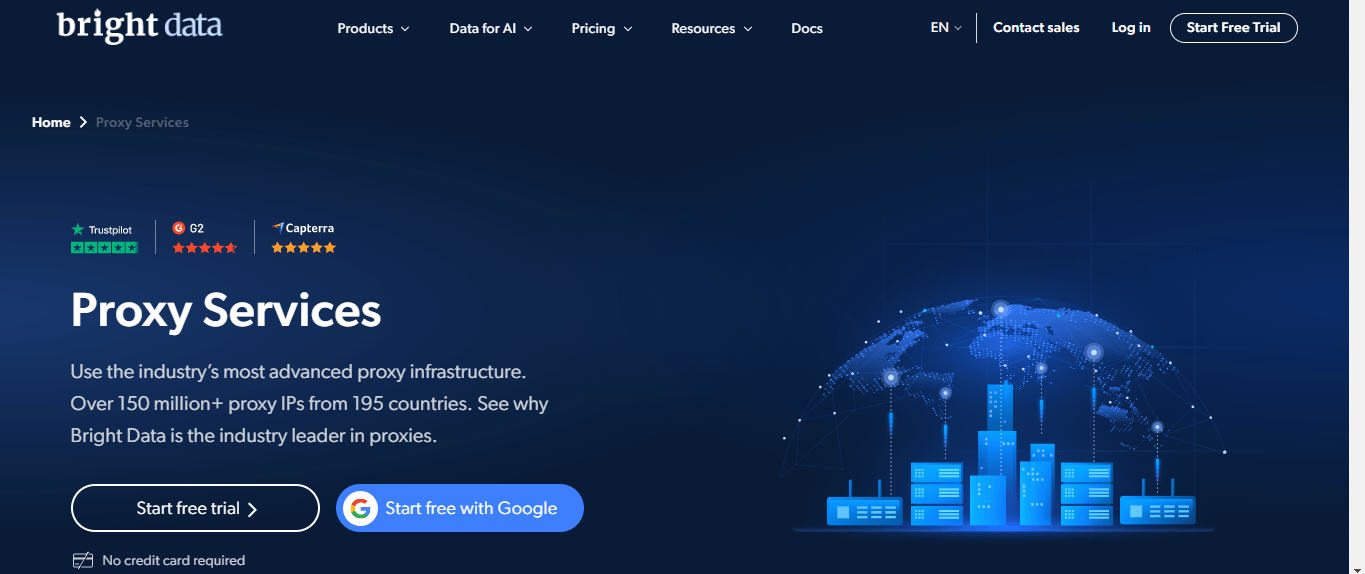
| AI Applicable Scenarios Public web access, AI Agents, RAG, Browser API |
Complete product lineup, suitable for evaluating proxies, browser rendering, and structured data delivery within a single workflow. |
| Risk Control Must Verify Before Launch |
Costs and configuration complexity are higher, so beginners should first limit budget, target domains, and concurrency. |
2Decodo
Decodo suits teams that need self-serve residential proxies, ISP proxies, and multi-region QA. It works more like a flexible mid-sized proxy pool, suitable for regional testing of ChatGPT, Claude, and Gemini web interfaces, and it can also pair with self-built Playwright or RAG scraping scripts.
- Best for: AI app regional QA, self-built browser scripts, and medium-scale public web scraping.
- Proxy types: residential, ISP, datacenter, and mobile proxies.
- Acceptance focus: availability in target regions, dashboard usability, IP rotation rules, and failure types.
- Purchase advice: test by target country and target site first, and don't judge by bundle traffic prices alone.
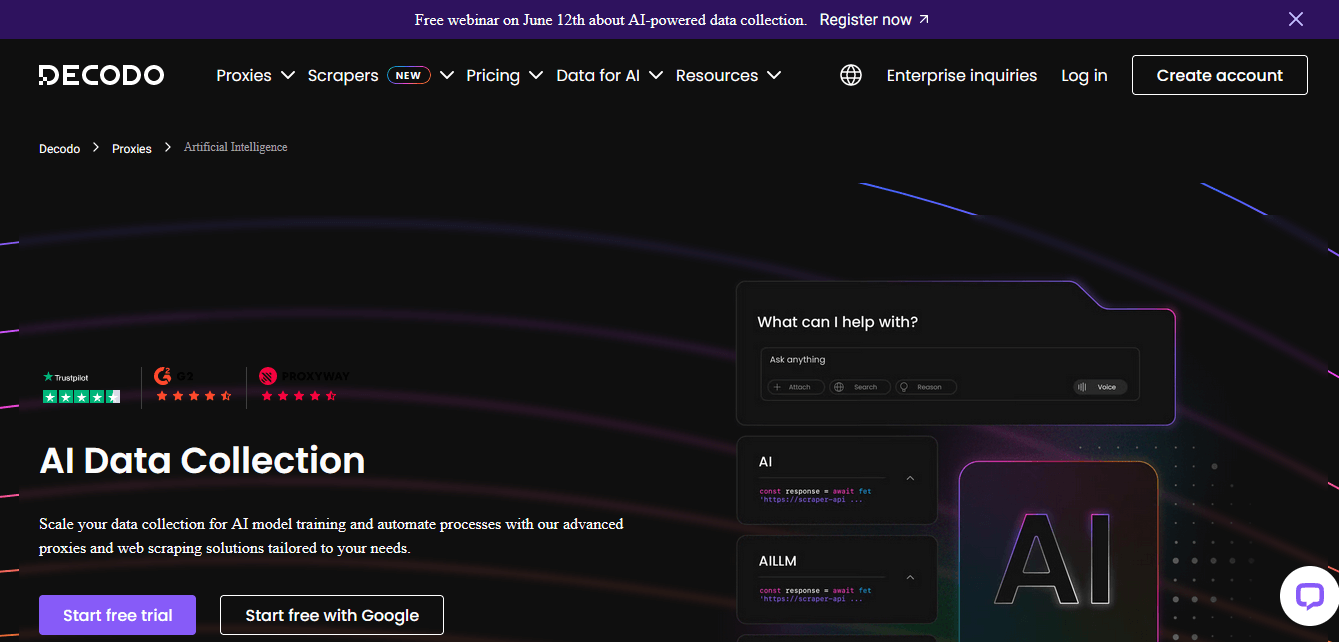
| AI Applicable Scenarios Self-serve residential proxies, multi-region QA, Playwright/Puppeteer proxy pools |
Low entry barrier; suitable for scaling from small-scale testing to a stable localized workflow. |
| Risk Control Must Verify Before Launch |
Availability pools and quality vary by region, so always rely on test runs against the target site. |
3SOAX
SOAX suits AI testing that requires city-level, carrier-level, or mobile network perspectives. For regional QA of Claude, Gemini, and ChatGPT, and for Agent or browser tasks that need to simulate mobile network environments, SOAX can be added to your shortlist.
- Best for: city-level QA, mobile network testing, and social media and mobile AI page checks.
- Proxy types: residential, mobile, ISP, and datacenter proxies.
- Acceptance focus: regional granularity, session persistence, mobile latency, and target platform error codes.
- Purchase advice: run trials with specific cities, carriers, and device scenarios, and avoid buying large bandwidth blindly.
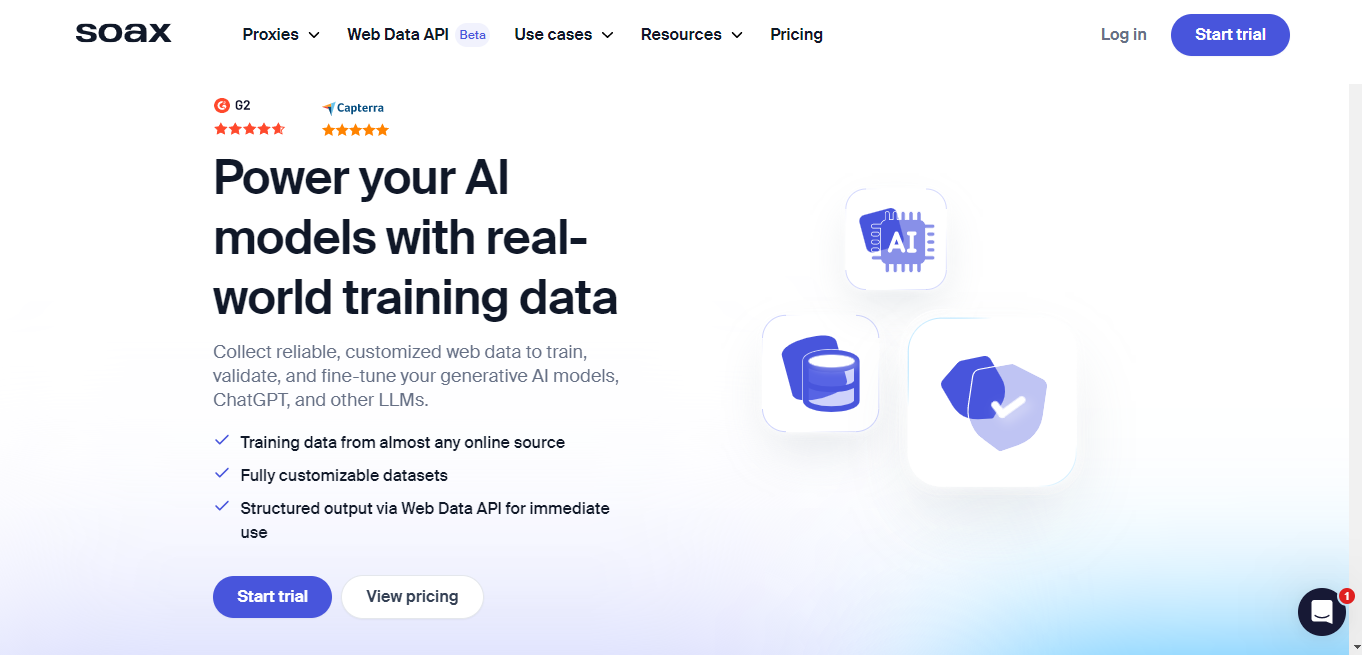
| AI Applicable Scenarios City/carrier targeting, mobile network QA, localized account session testing |
Location granularity and mobile proxy capability suit fine-grained regional testing. |
| Risk Control Must Verify Before Launch |
Pricing is usually not in the lowest tier, making it suitable for teams with clear regional needs. |
4IPRoyal
IPRoyal suits budget-conscious, small-scale AI app sessions, static residential proxies, and entry-level regional testing. It isn't a good fit for handling large-scale RAG or Agent collection from the start, but it's useful for verifying ChatGPT, Claude, and Gemini account regions and browser sessions.
- Suited for: small-scale ChatGPT/Claude/Gemini session QA and static residential proxy testing.
- Proxy types: static residential, rotating residential, datacenter, mobile, and sneaker proxies.
- Acceptance focus: inventory in target regions, session stability, refund/replacement rules, and customer support response.
- Purchase advice: start with a small number of test account environments, and don't treat a single success as proof of long-term stability.
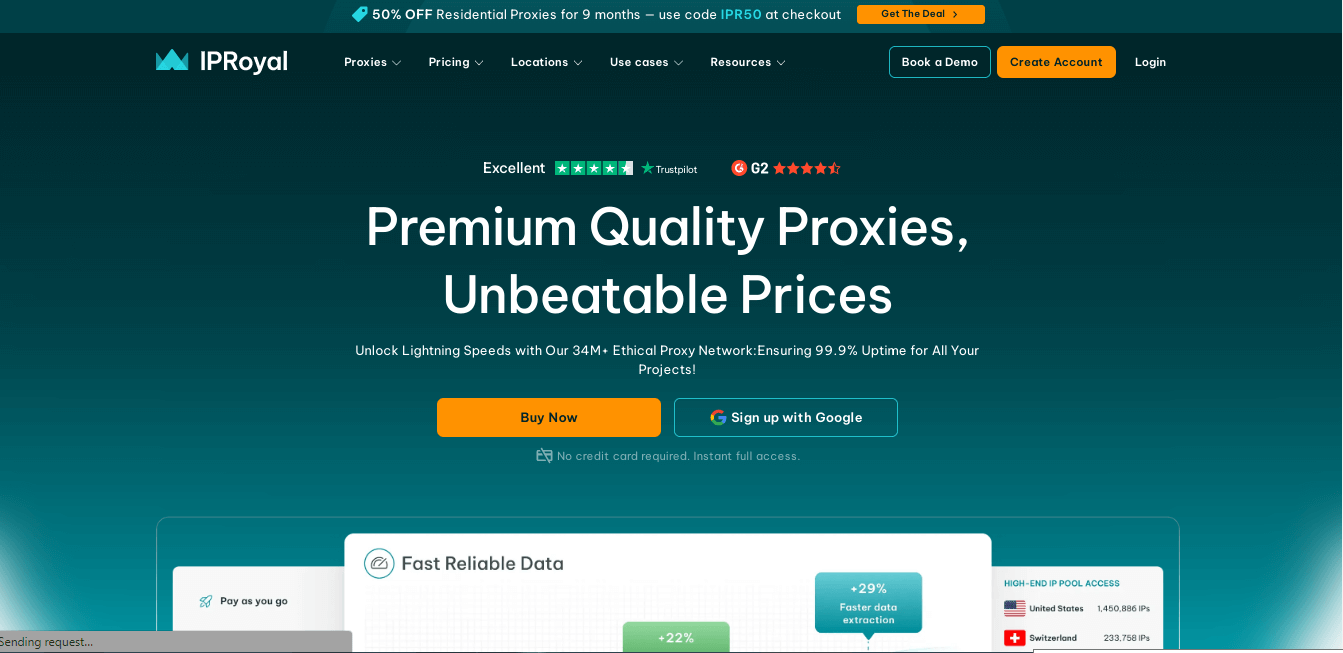
| AI Applicable Scenarios Budget static residential proxies, AI app session testing, small-scale regional QA |
Suitable for low-cost verification of account sessions and regional availability. |
| Risk Control Must Verify Before Launch |
Inventory and quality may fluctuate in some regions, so confirm the target region before purchasing. |
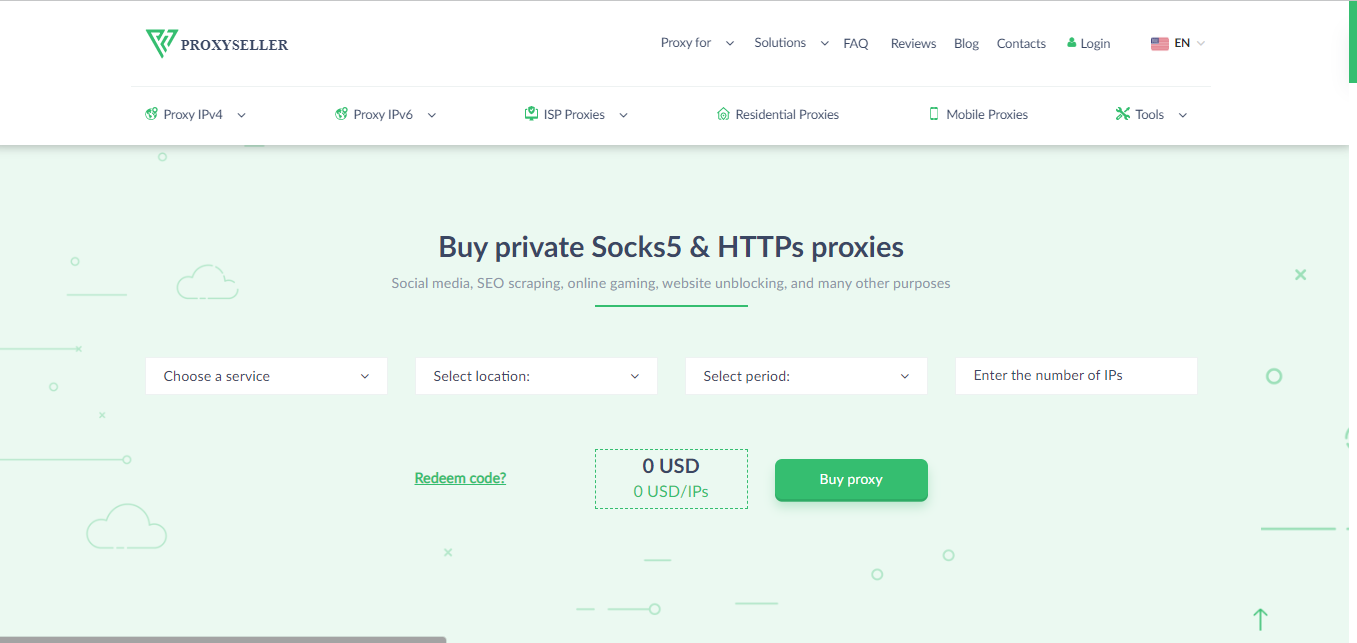
5Proxy-Seller
Proxy-Seller is better suited for fixed IPv4, private proxies, CLI egress, and connectivity testing of low-complexity API gateways. For terminal and API scenarios such as Codex CLI, OpenRouter, and internal LLM gateways, a fixed egress IP is often easier to audit than a large residential pool.
- Suited for: Codex CLI, OpenRouter, fixed egress IP, and API gateway connectivity testing.
- Proxy types: IPv4, IPv6, ISP, residential, and mobile proxies.
- Acceptance focus: fixed IPs, protocol support, allowlists, DNS, certificates, and timeout performance.
- Purchasing advice: for CLI scenarios, test HTTP(S) proxies and gateways first, and don't apply web-based conclusions to the terminal.
| AI Applicable Scenarios Fixed egress IP, AI CLI, OpenRouter/API gateways, private IPv4 |
A fixed egress IP supports auditing and troubleshooting, and suits command-line and API workflows. |
| Risk Control Must Verify Before Launch |
Web-based AI app sessions don't always suit datacenter or fixed IPv4 proxies, so test by platform. |
Pilot plan: from small sample to full launch
Before formal purchase, it is recommended to run a short trial period to prove that the proxy solution truly matches your current AI workflow. The goal of this plan is not to succeed once, but to find stable boundaries and failure conditions.
- First select 3 target regions, 3 target pages, and 2 account types to form a minimal test matrix.
- Run only one task per proxy type. Don't use account session test results to judge RAG crawling capability.
- Put success rate, latency, verification count, failure screenshots, cost, and customer service response into the same table.
- Run continuously for 48 hours before scaling up; a single short-term success does not mean stability.
If a trial run shows frequent security verifications, inconsistent model lists, unstable field quality, or unexplained costs, adjust the architecture and logs first instead of immediately upgrading your plan.
Post-Launch Operating Metrics
Once an AI proxy is live, measure it by access layer rather than just 'success or failure.' The metrics below help teams decide whether to expand capacity, switch providers, or change architecture.
| Metric Groups | Logged Content | Evaluation Criteria |
|---|---|---|
| Account Session | Login success rate, number of secondary verifications, regional consistency, whether model entry points are consistent | Only after 7 consecutive days of the same account in the same region without abnormal verifications does it enter the stable observation period. |
| CLI/API | First-packet latency, timeout rate, share of 429/403/5xx responses, certificate and DNS errors | Error codes should map to proxy, platform permissions, model quota, or gateway policy. |
| Browser API/Agent | Task completion rate, key element hit rate, screenshot readability, browser minute cost | A page that succeeds but has wrong fields also counts as a failure; don't rely only on HTTP 200. |
| RAG | Source coverage rate, duplication rate, field sampling accuracy, citation chain completeness | Answers must be traceable to the URL, time, region, and parser version. |
These metrics are recommended to start being recorded during the trial phase. A proxy solution truly worth scaling should be able to explain failures, control costs, retain evidence, and not rely on any operation that violates platform terms or access authorization.
Pre-Launch Checklist
- Define the purpose first: account regional QA, CLI network egress, public web retrieval, or RAG data enrichment.
- Isolate each AI platform with a separate browser profile or container, without copying cookies, storage state, or system credentials.
- Prepare test scripts for each region: record the login page, model list, console, API endpoints, and public web scraping results.
- Record timeouts, 403s, 429s, CAPTCHAs, and regional unavailability separately. Don't attribute every failure to proxy quality.
- Set request rate limits and retry caps to avoid abnormal load on AI platforms or public websites.
Compliance Boundaries
This article does not recommend using proxies for bulk registration, payment circumvention, CAPTCHA bypass, credential import, account sharing, platform ban evasion, or any activity that violates website terms. Access to AI platforms, public web pages, and internal systems should always involve authorization, rate limits, logging, and human review.
Next reads on the same topic
- Best AI Proxy Providers of 2026: Account Sessions, API Gateways, Browser Automation, and RAG Data Collection
- Best ChatGPT Proxies for 2026: Stable Sessions, Regional Testing, and Account Security
- Best Claude Proxies for 2026: Account Sessions, Team Workspaces, and Regional QA
- Best Gemini Proxies of 2026: Google Account Sessions, AI Studio, and Regional Testing
- AI Coding CLI Proxy Guide: Codex, Claude Code, Gemini CLI, and Gateway Routing
- 2026 Codex CLI Proxy Guide: ChatGPT Account Routing, Session Stability, and Workspace Isolation
- 2026 OpenRouter Proxy Guide: Unified API Routing, Console QA, and Model Access Checks
- 2026 AI Agent Proxy Guide: Browser Access, Public Web Retrieval, and Runtime Design
- 2026 Browser API Proxy Guide: Playwright, Puppeteer, and Managed Unblocking Layers
- 2026 RAG Proxy Guide: Retrieval Pipelines, Source Coverage, and Localized Scraping